
NELFE STATION
NAS — Nelfe Arcade Station

A cabinet designed as a connected point of experience.

Every NAS combines a one-player build, dynamic display surfaces and the NelfeTech stack. It can stand alone in a venue, or join a full Arena.

A row of NAS cabinets in use: black bodies with a lit red edge, marquee screen at the top, game screen in the middle, instruction card below the screen showing point values and the button map, players standing at the panel.
Concept visual. The instruction card under the screen explains the game and the controls before you even touch them.
Essential model

NAS Vertical

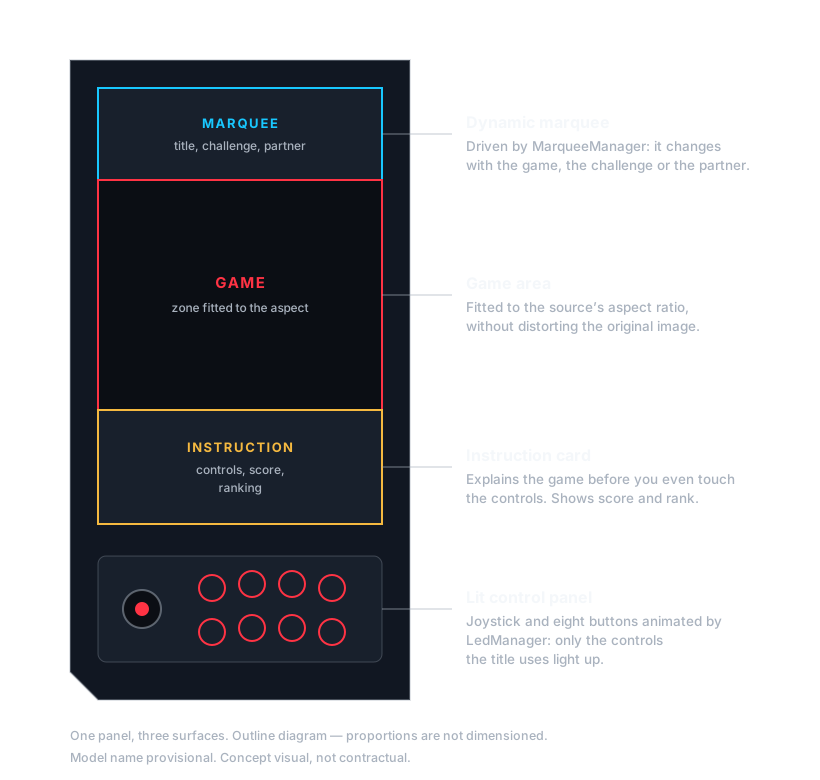
A single portrait panel carries the game, the marquee and the instruction card on one surface. The architecture reduces the component count while keeping a dynamic visual identity.
Request a configuration
Signature model

NAS Dual Screen

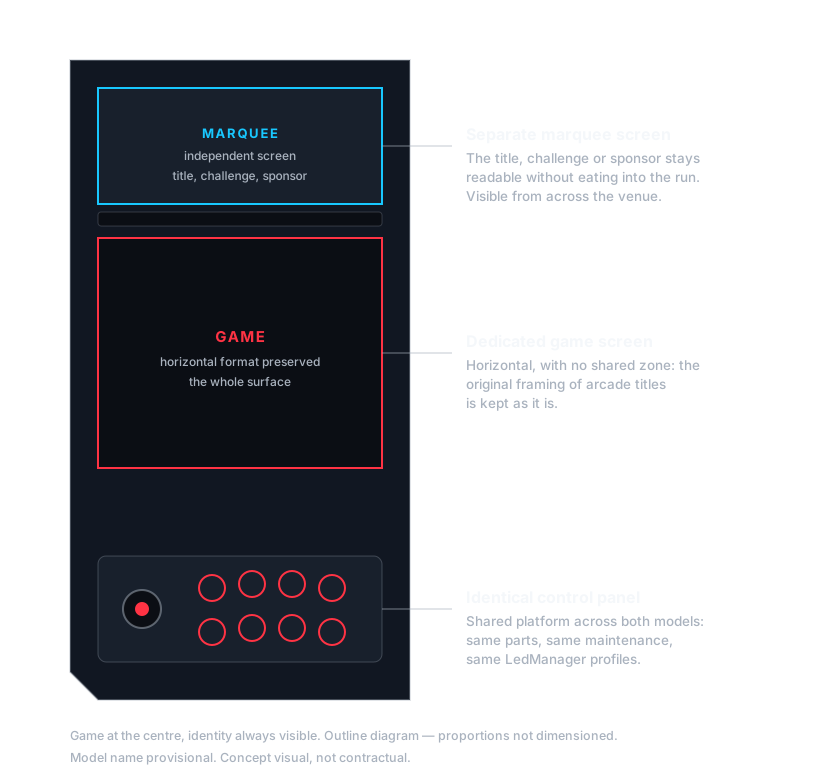
A horizontal main screen is dedicated to the game. A second screen above carries the marquee and contextual information. This version reads closer to classic arcade conventions.

Request a configuration

The names “NAS Vertical” and “NAS Dual Screen” are functional and provisional.

What the screen architecture changes.

The difference between the two models is not power but how the surfaces are laid out — and therefore what the player sees, and what the people around them see.

NAS Vertical: a single portrait panel split into three zones — marquee at the top, game in the middle, instruction card at the bottom — above a one-player panel with a joystick and eight buttons.
NAS Vertical — one panel, three surfaces. Fewer components, a distinctive silhouette.
NAS Dual Screen: an independent horizontal marquee screen above a dedicated horizontal game screen, above a control panel identical to the NAS Vertical.
NAS Dual Screen — the game keeps its whole surface, the identity stays readable from across the room.

The shared platform.

  • Upright format, one player.
  • Control panel lit according to the game configuration.
  • Driven by the APIExpose stack.
  • Surfaces and media managed by configuration.
  • Maintenance and deployment designed for supervised use.
  • Arena, Record, capture and sign-in options.

Choosing a NAS by use, not just by screen.

Comparison of the two NAS models
Criterion NAS Vertical NAS Dual Screen
PositioningEssential, controlled rolloutSignature, higher visibility
DisplayOne portrait panel, multiple zonesGame and marquee separated
Game aspectFitted within a dedicated zoneHorizontal main screen
MarqueeTop zone of the same panelIndependent screen above
Instruction cardBottom zone availableScreen or printed, by configuration
Lit panelYes, by profileYes, by profile
Arena / RecordOptionalOptional
CaptureOptionalOptional
Best suited toNetworks, host venues, multi-stationFlagship, events, staging

Configurations, not entirely different cabinets.

Arena and Record add overhead signage, capture and orchestration to a NAS, suited to competition or to putting performances on show.

NAS Arena — built to be watched

Two one-player NAS can be set face to face or mirrored for qualifiers and finals. A topper marks the zone, while optional cameras film the panel and the players’ faces.

Record Station — the venue’s reference point

Placed in the central zone, it highlights the current challenge, the records and access to the leaderboard. It can act as the signature cabinet, a qualifier post or a demonstrator.

Filming the audience and the players requires appropriate signage and consent.

Let’s define the NAS that fits your use.

Tell us about your use, your space and how many stations you have in mind, so we can prepare a fitting configuration.

Start a project